
Signs your child or teen may need to see a psychiatrist in Milan
By Federico Baranzini · Updated 2026-06-08
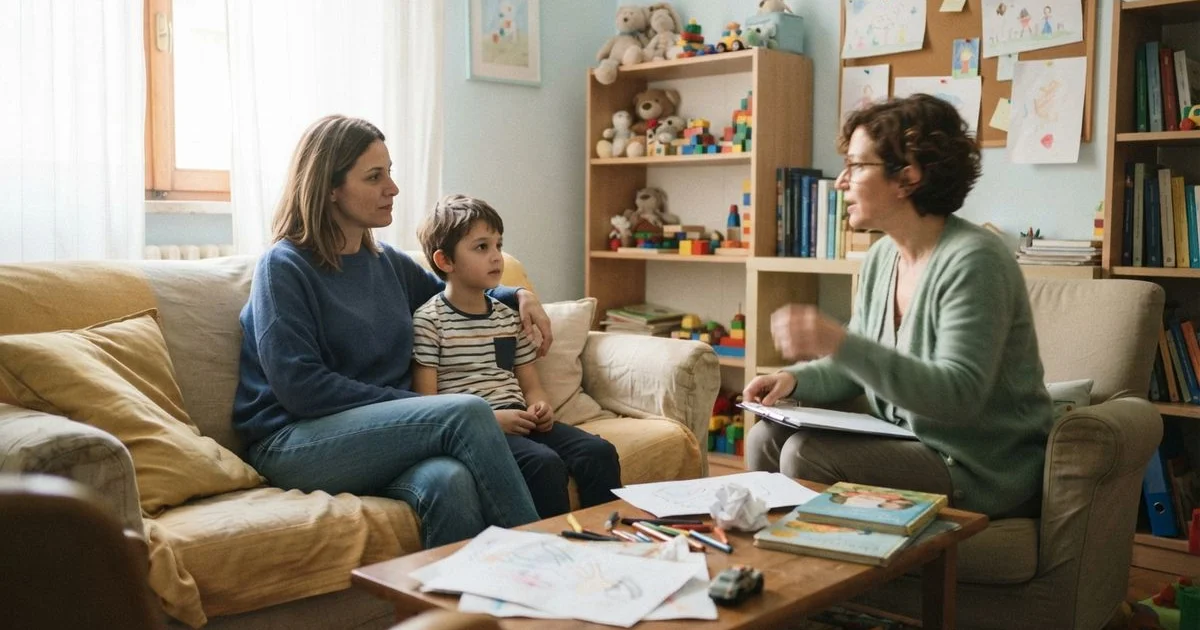
Most parents second-guess themselves before booking a psychiatric evaluation for a child. A single bad week at school, a stretch of irritability, a phase of not wanting to see friends: on their own, none of these mean much. The harder question is when a pattern stops looking like a phase and starts looking like something a professional should assess.
There’s no single test for this, but there are patterns worth paying attention to. This guide walks through what tends to separate ordinary childhood ups and downs from signs that deserve a proper look, and what typically happens once you book an evaluation with a child and adolescent psychiatry provider in Milan.
What counts as a genuine warning sign
Clinicians generally look at three things together: how long a change has lasted, how many settings it shows up in, and how much it’s getting in the way of daily life. A child who’s flat and withdrawn only at home, but fine at school and with friends, is a different picture from a child whose mood or behavior has shifted everywhere.
Signs that usually warrant a conversation with a professional include:
- A drop in school performance that isn’t explained by a change in teacher, subject, or workload
- Sleep that’s badly disrupted for more than two or three weeks, either too little or too much
- Loss of interest in activities the child used to genuinely enjoy
- Marked irritability or anger that feels out of proportion and is hard to de-escalate
- Talk of feeling worthless, hopeless, or wanting to disappear, in any form
- Sudden social withdrawal from friends or family the child was previously close to
- Physical complaints (stomach aches, headaches) with no medical explanation, especially tied to school days
- Repetitive behaviors, rigid routines, or intense reactions to small changes that are new or worsening
Any mention of self-harm or suicidal thoughts, however it’s phrased, is not a wait-and-see situation. That needs an evaluation quickly, not a slot on a general waiting list.
Behavior that’s usually developmental, not diagnostic
It helps to know what typically doesn’t need urgent concern. Testing boundaries, mood swings around puberty, a temporary dip after a big life change (a move, a new sibling, parents separating), or a short rough patch after a disappointing grade are common and usually resolve without treatment. The distinguishing factor is time and scope: does it ease off within a few weeks, or is it settling in and spreading?
| Pattern | Usually developmental | Worth an evaluation |
|---|---|---|
| Duration | Days to a couple of weeks | Weeks and not improving |
| Settings affected | One (home, or one social group) | Multiple (home, school, friendships) |
| Functioning | Still doing schoolwork, seeing friends | Grades slipping, avoiding people |
| Trigger | Clear, recent event | No clear trigger, or trigger long past |
| Trend | Getting better on its own | Staying the same or getting worse |

What a first evaluation actually involves
A first appointment with a child and adolescent psychiatrist is longer than a typical adult visit, usually because it covers both a conversation with the parents and time with the child or teen directly. Bringing a rough timeline of when the change started, any school reports, and notes on sleep and appetite helps the clinician move faster than starting from scratch.
Because this specialty has a smaller footprint in Milan than general adult psychiatry, it’s worth calling ahead to more than one practice and being specific about what you’ve noticed, rather than describing things vaguely. Practices generally prioritize based on how you describe the situation, so specifics help.
If your child refuses or resists
It’s common for a teenager especially to push back on the idea of “seeing someone.” Framing the visit as a conversation rather than a diagnosis, and being honest that you’re not sure what’s going on either, tends to land better than presenting it as a decision that’s already been made. If resistance is the main obstacle rather than the underlying concern, a separate conversation about how to approach that discussion is worth having before the appointment. Our guide on talking to your teenager about seeing a psychiatrist covers how to open that conversation without it feeling like an ambush.
This article offers general information and isn’t a substitute for a professional evaluation. If you’re worried about immediate safety, don’t wait for an appointment: contact emergency services or a crisis line.
Milan’s psychiatrists and pediatric mental health specialists are ranked and reviewed here using a published, consistent method described in our methodology, so you can compare options before you call.
FAQ
- What's the difference between normal moodiness and something to worry about?
- Normal moodiness comes and goes and doesn't stop a child from functioning day to day. A sign worth checking is a change that sticks around for weeks, shows up in more than one setting (home and school, for example), and starts to interfere with sleep, friendships, or schoolwork.
- Should I take my child to a pediatrician first or straight to a psychiatrist?
- Either can be a reasonable starting point. Many families start with their pediatrician, who can rule out physical causes and refer onward. If the concern is clearly about mood, behavior, or development, going directly to a child and adolescent psychiatrist can save a step.
- How long is the wait to see a child psychiatrist in Milan?
- This is a narrow specialty locally, so availability is tighter than for general adult psychiatry. Calling several practices and being specific about your concern, rather than joining one general waiting list, usually gets you seen faster.
- Can a school ask a child to see a psychiatrist?
- A school can recommend an evaluation and share observations, but it can't require one. The decision, and any diagnosis or treatment, stays with the family and the clinician.