
What to expect at your first psychiatric appointment in Milan
By Federico Baranzini · Updated 2026-06-13
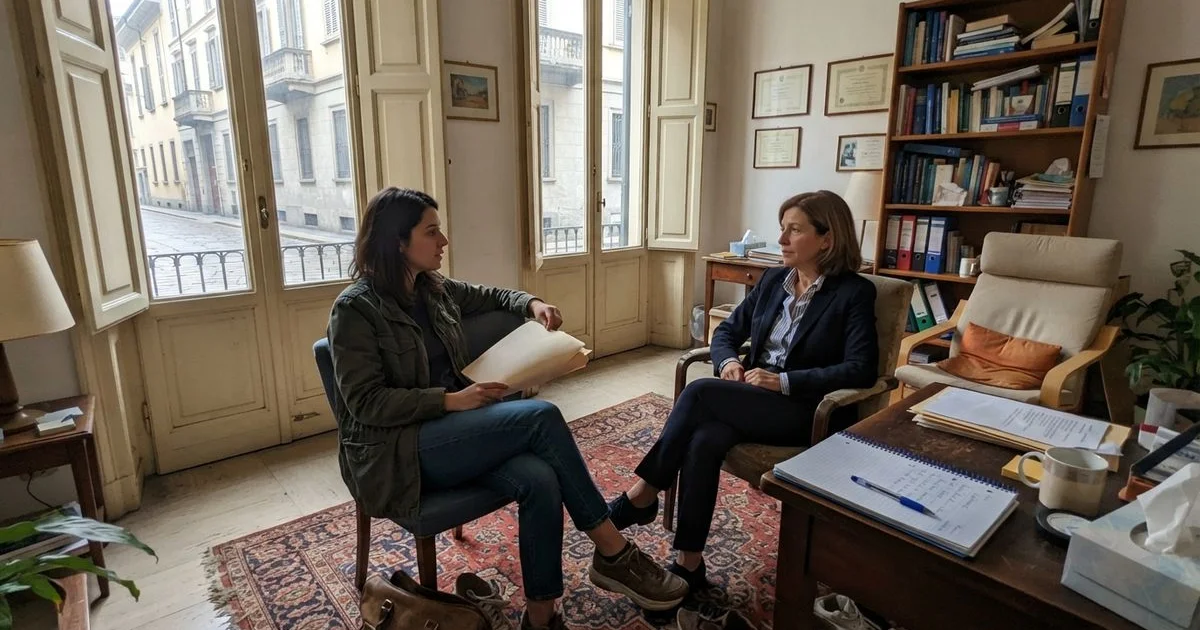
Not knowing what happens in the room is one of the biggest reasons people put off a first psychiatric visit. The appointment itself is more structured, and less intimidating, than most people expect. Here’s what typically happens from booking to walking out.
Before you go
Most adult psychiatry practices in Milan take direct bookings by phone or through an online form, no referral required for private visits. If you want to use the public system instead, you’ll need an impegnativa (a referral form) from your GP first, which usually means an extra step and a longer wait, but a much lower cost.
It helps, though it isn’t required, to arrive with:
- A list of current medications, including doses and how long you’ve been on each
- Any previous diagnoses, discharge letters, or psychological test results
- A rough timeline: when did things start, and did anything change around then
- Notes on sleep, appetite, and how your daily functioning has shifted
What happens during the visit
A first psychiatric evaluation in Milan typically runs 45 to 90 minutes, noticeably longer than a routine GP visit. That time usually breaks down into a few parts.
| Stage | What it covers | Rough time |
|---|---|---|
| History taking | Personal, family, and medical history | 15 to 25 minutes |
| Current symptoms | What’s happening now, how long, how severe | 15 to 20 minutes |
| Daily functioning | Sleep, work, relationships, appetite | 10 minutes |
| Discussion | Working diagnosis, options, next steps | 10 to 20 minutes |
The psychiatrist is building toward a working diagnosis or hypothesis, not necessarily a final label on day one. Some conditions take a couple of visits to pin down with confidence, especially where mood, anxiety, and attention symptoms overlap.

What a good first visit looks like
A solid first appointment usually ends with three things: a working diagnosis or hypothesis, a clear discussion of treatment options (medication, therapy, or both, and why), and a concrete plan for what happens next, whether that’s a follow-up date, a referral to a therapist, or a period of watchful waiting before deciding on medication.
Signs the visit went well: you were asked open questions rather than given a checklist, side effects and alternatives to any suggested medication were explained, and you left with a specific next step rather than a vague “come back if it gets worse.” If medication and therapy both come up, our guide on how psychiatrists and therapists work together explains how that coordination usually happens in practice.
Questions worth asking before you leave
- What’s the reasoning behind this diagnosis, and how confident are you in it at this stage?
- If medication is suggested, what are the common side effects, and how soon should I expect to notice a difference?
- How will we know if this plan is working, and what does the follow-up schedule look like?
- Should I also see a therapist alongside this, and if so, what kind?
After the visit
Ongoing treatment for most conditions means regular check-ins, often every two to four weeks early on while medication is being adjusted, moving to every two to three months once things stabilize. If a psychiatrist doesn’t propose any follow-up at all after starting a new medication, that’s worth asking about directly rather than assuming it’s not needed.
It’s also worth deciding in advance how you’ll reach the practice between visits if something comes up: a question about a side effect, a symptom that’s changed, or simple reassurance during a medication adjustment. Some practices respond to phone calls or messages within a day or two; others prefer you wait for the next scheduled appointment unless it’s urgent. Neither approach is automatically wrong, but knowing which one applies to your psychiatrist avoids frustration later.
If the first visit doesn’t feel right
Not every first appointment leads to a good fit, and that’s a normal, fixable outcome rather than a failure on your part. If you left feeling unheard, rushed, or unclear about the plan, it’s reasonable to seek a second opinion or try a different practice before committing to ongoing treatment. A mismatch in communication style matters over the months of a treatment relationship, so trusting that instinct early is worth more than pushing through discomfort out of politeness.
The directory lists psychiatrists across Milan by specialty, and scores them on responsiveness, clarity, and patient feedback, not just star rating; see our methodology for how that works.
FAQ
- How long does a first psychiatric appointment take?
- Usually 45 to 90 minutes. That's long enough to cover your history, current symptoms, medications, and daily functioning without rushing, and to end with a working plan rather than just a prescription.
- Do I need a referral to book a private psychiatrist?
- No, private practices in Milan generally take direct bookings. A referral (impegnativa) is only needed to access a visit through the public SSN system at reduced cost.
- What should I bring with me?
- A list of current medications and doses, any past diagnoses or discharge letters, and a rough timeline of when your symptoms started or changed. None of this is mandatory, but it saves time in the room.
- Will I leave with a prescription on day one?
- Sometimes, but not always, and that's not necessarily a bad sign either way. A thorough first visit is more about reaching a working diagnosis and a plan than about handing over medication immediately.